

Abstract Authors
Janca Pieters - Department of Microbiology, Stellenbosch University
Tersia Andrea Conradie - Department of Microbiology, Stellenbosch University
Karin Jacobs - Department of Microbiology, Stellenbosch University
Abstract Description
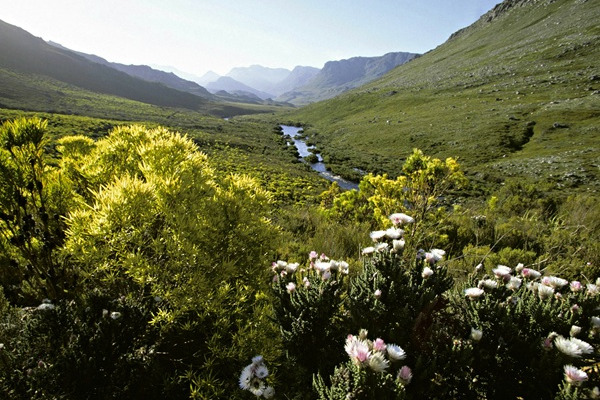
The phylum Acidobacteriota is one of the most abundant and widespread bacterial groups in soils, often comprising a significant proportion of the microbial community. Despite this prevalence, only a limited number of species have been successfully isolated and described, largely due to their fastidious growth requirements and the challenges of maintaining them in pure culture. This highlights the ecological importance of the group and the need to expand knowledge through the discovery of novel representatives. In this study, we describe a novel Gram-negative, aerobic, capsule-forming strain, designated DAS-389T, that was isolated from soil collected in the Kogelberg Nature Reserve, Western Cape, South Africa. Colonies were small and pink, multiplying by binary division. Optimum growth occurred at 20–26 °C and pH 5.5–6.5, with tolerance to NaCl concentrations up to 1.5 %. DAS-389T is chemoorganotrophic, with substrate preferences for sugars and polysaccharides such as starch and fructose. The genome, 4.13 Mb in size with an average G+C content of 63.49 %, encodes enzymes for carbohydrate metabolism as well as genes associated with stress tolerance and survival responses. Polyphasic analysis placed DAS-389T within the family Acidobacteriaceae, order Terriglobales, subdivision 1 of Acidobacteriota. However, it could not be assigned to any currently described genus. Based on its phenotypic, genomic, and phylogenetic distinctiveness, we propose the classification of DAS-389T as a novel genus, Candidatus Dedyshia gen. nov., with the designated type strain Candidatus Dedyshia acidiphila sp. nov.