

Abstract Authors
Mohamed-Deen Hendricks - Department of Biotechnology, University of the Western Cape
Patronella Maroale - Department of Chemistry, University of the Western Cape
Darin Edward Holman - Department of Biotechnology, University of the Western Cape
Chante Adams - Department of Chemistry, University of the Western Cape
Mmabatho Mocwana - Department of Chemistry, University of the Western Cape
Hanna Abbo - Department of Chemistry, University of the Western Cape
Marshall Keyster - Department of Biotechnology, University of the Western Cape
Salam Titinchi - Department of Biotechnology, University of the Western Cape
Abstract Description
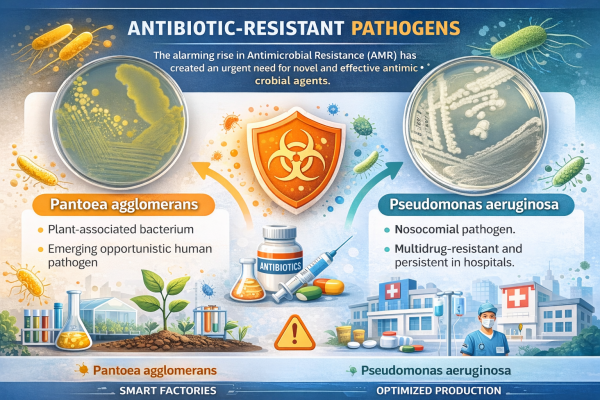
The demand for novel and effective antimicrobial medicines has increased worldwide due to the concerning increase in antimicrobial resistance (AMR). In this study, a series of new Schiff base sulfadiazine-based derivatives were synthesized using substituted aldehydes and sulfadiazine under catalytic conditions to form the desired products. The chemical structures of the synthesized compounds were confirmed using spectroscopic techniques, FT-IR, 1H- and 13C-NMR. The in vitro antimicrobial activity of the synthesized compounds was determined using the minimum inhibitory concentration (MIC) value against two bacterial strains, namely, Pantoea agglomerans and Pseudomonas aeruginosa. Five compounds were screened for antimicrobial activity in a plate-based assay at 10 mM and 1 mM concentrations. According to our results, compounds 1, 3 and 4 showed the highest antibacterial activity, while compounds 2 and 5 exhibited little to no inhibition. The minimum inhibitory concentration (MIC) experiment was conducted for compounds 1, 3 and 4. The MIC value for compound 1 against both P. agglomerans and P. aeruginosa was 0.15 mM. Whereas the MIC values of compound 3 were 0.15 mM against P. agglomerans and 0.75 mM against P. aeruginosa. The MIC of compound 4 was 0.35 mM against both bacterial strains. Compounds 1 and 3 are more potent than the reference drug (Kanamycin sulphate) because they require lower concentrations to inhibit microbial growth. Conversely, compound 4 exhibits similar potency to the reference drug, requiring comparable concentrations for the same effect. This suggests that these compounds could potentially be more effective in combating infections. The substituents and their positions on a molecule's backbone can significantly affect its biological activity primarily due to changes in molecular geometry, polarity, binding affinity, and reactivity. These factors collectively determine how a molecule interacts with biological targets affecting its efficacy as a drug or bioactive compound.