

Abstract Authors
Edwin I Wanjofu - Department of Biochemistry, Genetics and Microbiology, University of Pretoria
Emma T Steenkamp - Department of Biochemistry, Genetics and Microbiology, University of Pretoria
Stephanus N Venter - Department of Biochemistry, Genetics and Microbiology, University of Pretoria
Brozel Volker - South Dakota State University, United States of America
Sukhvir Kaur - South Dakota State University, United States of America
Chrizelle W Beukes - The James Hutton Institute, United Kingdom
Esther K Muema - Department of Soil Science, Stellenbosch University
Abstract Description
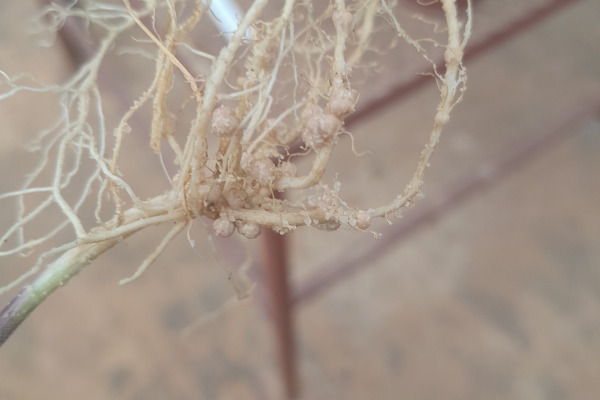
Bradyrhizobium diazoefficiens is a nitrogen-fixing symbiont of soybean, which is globally distributed food crop originating from East Asia. While soybean is native to East Asia, its global expansion—particularly in the Americas—has been accompanied by widespread use of Bradyrhizobium inoculants. Inoculation has enhanced productivity, reduced reliance on inorganic fertilizers, and promoted environmentally sustainable agricultural practices. However, the use of symbionts outside their native soils raises questions about genetic diversity shaped by horizontal gene transfer (HGT) and environmental pressures. To ensure establishment of the symbiosis under field conditions, especially in regions outside the native range of soybean, B. diazoefficiens or other species of Bradyrhizobium are repeatedly applied as inoculants at the time of planting. In the current study, we explored the genetic diversity of a global set of B. diazoefficiens strains isolated from soybean and other hosts. For this purpose, publicly available genome sequences were complemented with those for B. diazoefficiens isolated from soybean collected in South Africa and the USA. The genomes were then subjected to phylogenomics analysis with the Up-to-Date Core Genes (UBCG) pipeline and average nucleotide identity analysis (ANI). We also used Roary and Orthofinder to compare gene sets shared across genomes and across individual symbiosis islands (SIs). The completeness of SIs was also explored using functional characterization of the genes encoded. Lastly, a glasshouse experiment was set up to assess the symbiotic performance of selected strains on three soybean cultivars grown in South Africa. All the genome-based analyses separated B. diazoefficiens into multiple robust clusters of strains. Different patterns were generally obtained from the SI analyses, especially regarding the orthogroups shared. Interestingly, inoculant strains mostly clustered together and showed similar patterns across all tests conducted. From the glasshouse experiments, strains that clustered with the inoculant strains in the in silico tests mostly behaved similarly to the inoculant strains. These results therefore showed that despite diversity observed within B. diazoeficiens, inoculant strains generally maintain similar genomic characteristics. This suggests that their repeated use as inoculants has preserved their genomic architecture, which is different from what is observed for other B. diazoefficiens strains.