
A genome-guided approach towards characterization of lanthipeptides from a marine invertebrate symbiont, bacterial isolate U16

Dr Nompumelelo Philile Praiseworth Ikegwuoha
Abstract Authors
Nompumelelo Philile Praiseworth Ikegwuoha, Humaira Lambarey, Elzaan Booysen, Fazlin Pheiffer, Matthew Laisai, Hemani Nanjee, Leonardo Joaquim van Zyl, Marla Trindade.
Institute for Microbial Biotechnology and Metagenomics (IMBM), Department of Biotechnology, University of the Western Cape
Abstract Description
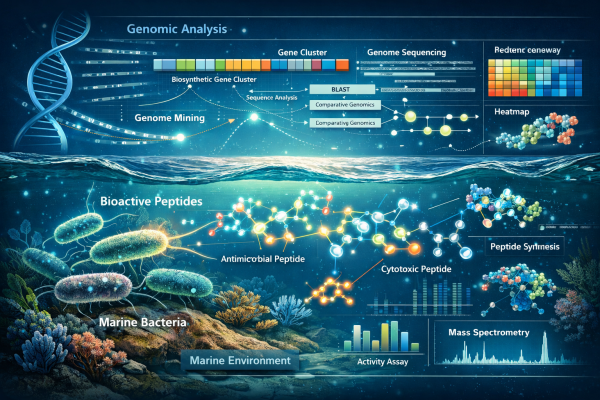
Antimicrobial resistance is one of the most significant threats to human and animal health, and there is an imminent global need for novel therapeutics. The marine environment remains a reliable source of novel chemical compounds with unique structures and potent bioactivities. This study aimed to identify and characterize lanthipeptides from an uncharacterized Gram-negative symbiont of the sea urchin from Kalk Bay, South Africa. Lanthipeptides are a prominent class of ribosomally synthesized and post-translationally modified peptides (RiPPs) characterized by the presence of lanthionine and methyllanthionine crosslinks. These bonds are formed following the dehydration of serine and threonine residues to dehydroalanine and dehydrobutyrine, respectively, followed by the formation of thioether linkages between the newly formed side chains and cysteine residues. The fully modified and protease-cleaved mature peptides exhibit diverse bioactivities, including antimicrobial, immunomodulatory, anti-inflammatory, and pain-relieving (antiallodynic) effects. Lanthipeptides produced by Gram-positive bacteria are well-characterized and widely known. In recent years, the increase in genome sequencing efforts has highlighted that Gram-negative bacteria encode an enormous variety of lanthipeptide biosynthetic gene clusters (BGCs), most of which are uncharacterized. Genome mining of several bacterial isolates from the sea urchin led to the identification of a class I lanthipeptide BGC in a Gram-negative bacterial isolate, U16, that encodes three distinct and unique peptide precursors. Successful heterologous expression of the precursor peptides together with the native processing enzymes LanBC was verified by liquid chromatography-tandem mass spectrometry (LC-MS). When screened for antimicrobial activity against fungal and bacterial isolates, peptide 1 showed antibacterial activity against three food-borne pathogens. This study highlights the potential of marine Gram-negative endosymbionts in offering novel bioactive lanthipeptides that could be developed into therapeutic products.Dr Nompumelelo Philile Praiseworth Ikegwuoha
Lecturer