

Abstract Authors
Ameerah I Abrahams - Department of Biotechnology, University of the Western Cape
Lucinda Baatjies - Biomedical Research Institute, Stellenbosch University
Ashwil Klein - Department of Biotechnology, University of the Western Cape
Vuyo Mavumengwana - Biomedical Research Institute, Stellenbosch University
Marshall Keyster - Department of Biotechnology, University of the Western Cape
Abstract Description
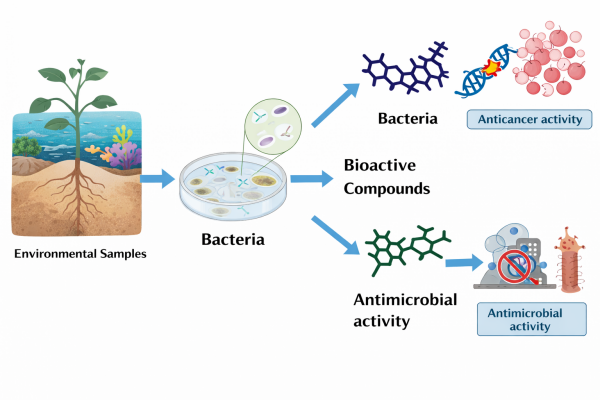
Cancer is a leading cause of death worldwide, responsible for one in six deaths. While chemotherapy and radiotherapy remain standard treatments, they are often limited by severe side effects, poor selectivity, and drug resistance. This has driven interest in alternative therapeutic approaches, including bacteria and their bioactive metabolites as potential anticancer agents. Bacteria such as Pantoea agglomerans (R6) produce diverse secondary metabolites with pharmacological activity. In this study, extracts from wild-type and stressed mutant strains of P. agglomerans were evaluated for anticancer potential. Methanolic extracts were profiled using mass spectrometry to assess differences in metabolite composition, and their effects were tested on two cancer cell lines: U251 glioblastoma (GBM) and MDA-MB-231 triple-negative breast cancer (TNBC). Initial screening at 500 μg/mL showed the strongest inhibition (>80 %) against MDA-MB-231, while U251 cells were less sensitive (<40 %). Dose response testing confirmed selective cytotoxicity against TNBC cells. Among the extracts, strain R6 achieved 52.12 % inhibition at 125 μg/mL, W10 showed 53.17 % at 250 μg/mL, and W16 displayed the strongest effect with 68.97 % inhibition at 62 μg/mL. Against non-cancerous Vero cells, inhibition remained below 50 %, indicating reduced toxicity to normal cells. Apoptosis assays by flow cytometry confirmed that extracts induced programmed cell death, with W16 being the most active. Mitochondrial function analysis using the Oroboros O2k further revealed elevated respiratory activity in treated MDA-MB-231 cells, suggesting mitochondrial involvement in the cytotoxic response. Overall, the results indicate that P. agglomerans metabolites selectively inhibit TNBC growth while sparing normal cells (Vero). Stress conditions influenced metabolite production and enhanced bioactivity, particularly in mutant W16. These findings highlight the potential of P. agglomerans as a novel source of bacterial metabolites with anticancer properties, supporting further investigation into their mechanisms and therapeutic applications.